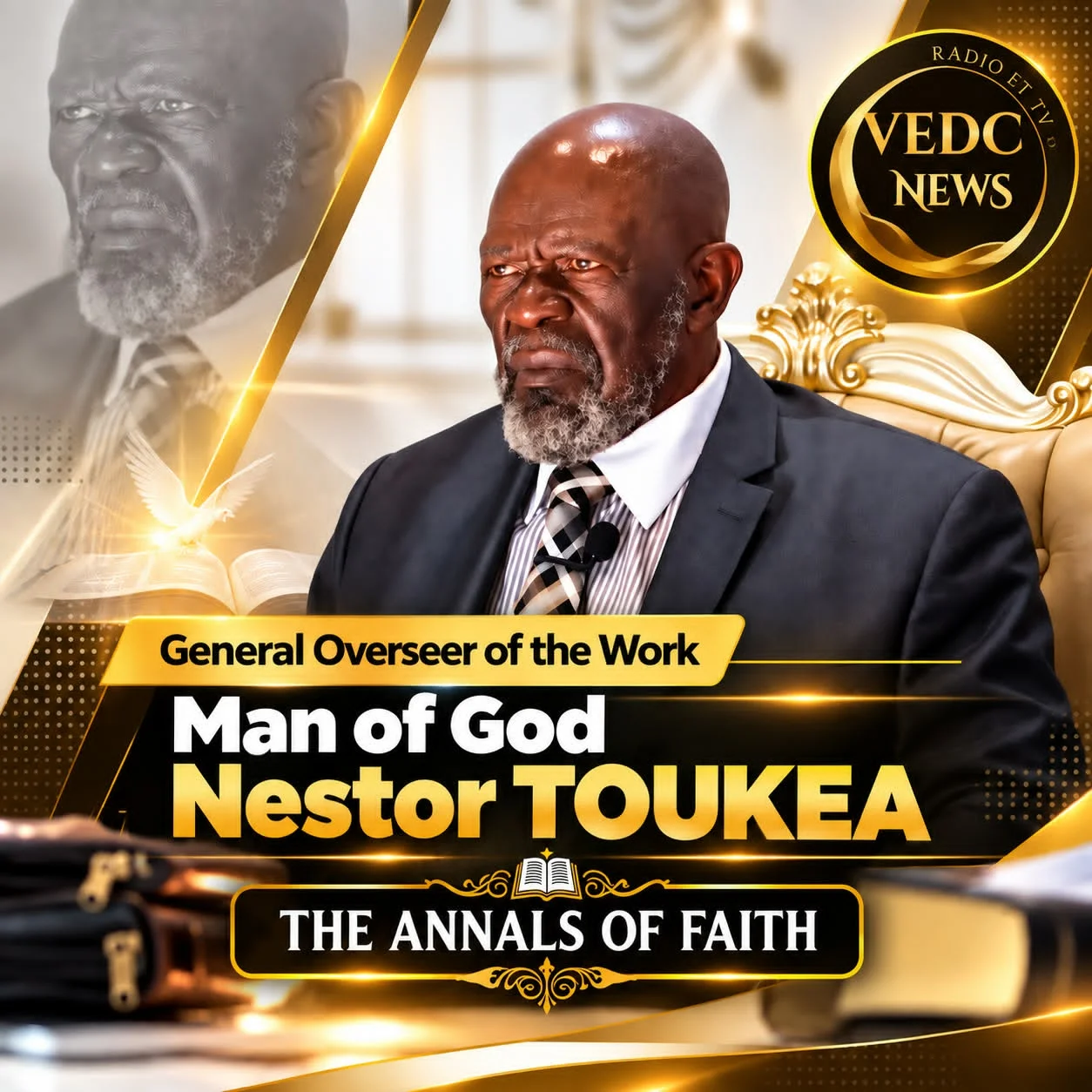
THE ANNALS OF FAITH
No. 2 — September 29, 2026
From Spiritual Vision to Administrative Legality: The Triumph of a Faithful Servant of God, the Man of God Nestor Toukea
The Sovereign Call and the First Steps of a Builder
The history of the True Church of God of Cameroon (VEDC) remains inseparable from the extraordinary destiny of Reverend Nestor Toukea. It all began in 1958 with a clear and unequivocal divine commission: “Sanctify yourself, take this Book, read it and explain it to men.”
Driven by a powerful love for God and an absolute determination to obey his Creator, Nestor Toukea trained alongside some of the great Pentecostal figures of his time before being officially ordained as a Pastor on December 24, 1964, in Loum. At that time, the work was growing under the name “Christian Assembly of Christ’s Witnesses,” but the foundations of a movement destined to achieve national and international reach had already been laid.
The Wisdom of Alliances and Institutional Consolidation
Demonstrating exceptional dynamism and managerial foresight, Pastor Nestor Toukea understood very early the importance of unity and the legal structuring of the work. In 1976, he made a major strategic choice by joining forces with the Nigerian pioneers of the VEDC.
On June 26, 1976, he signed an agreement for close cooperation with Pastor Smith Udia Umoh of the Mother Church in Nigeria, followed on September 16 of the same year by a merger agreement with Evangelist Inyang E.J. Putting the interests of God's work above any personal ambition, he gave up his own denomination in order to join the VEDC, thereby contributing to the establishment of numerous congregations throughout the country.
The Absolute Choice of Legality in the Face of Dissident Ambitions
The departure of Reverend Inyang in 1978 ushered in a period of transition during which competing ambitions emerged. In the face of Pastor Guillaume Lobe, Nestor Toukea chose the path of wisdom and administrative transparency.
Although a reconciliation agreement was signed in 1988 under the supervision of the Senior Divisional Officer of Meme, a contested Board of Directors was established. Refusing to accept disorder, Pastor Nestor appealed to the Ministry of Territorial Administration (MINAT) through a gracious administrative appeal in order to restore the legality that had been compromised.
The State's response was immediate: on January 11, 1989, MINAT annulled the contested order. A few months later, on June 24, 1989, Nestor Toukea was democratically and legally elected as head of the VEDC under the direct supervision of the administrative authorities.
Resistance to Detractors and Judicial Victory
It was at this precise moment that the dissident movement led by Pastor Samuel Matike emerged. Dissatisfied with the legal turn of events, he proclaimed himself leader and attempted to destabilize the Church.
He went so far as to challenge the ministerial order officially recognizing Nestor Toukea's presidency before the Administrative Chamber of the Supreme Court. The highest court ultimately ruled against Matike, leaving him in a state of illegality until his death in 2020.
For nearly three decades, from 1992 to 2020, Reverend Nestor Toukea thus led the VEDC in strict compliance with the laws of the Republic, regulatory provisions, the VEDC statutes, and while remaining faithful to the Bible in accordance with the divine commission he had received.
The Contemporary Parallel: History Repeats Itself in the Face of the Spirit of Division
Church history teaches us that yesterday's challenges can shed light on today's struggles. Between 2021 and 2026, the VEDC witnessed a resurgence of this same dissident dynamic through the actions of Pastor Tchana Landry Tchamy Dantse.
Like Matike, he attempted to challenge the legitimacy of the Executive Bureau of the organization (BEO), led by Reverend Pastor Abate Ndengue François, by contesting the ministerial letter of recognition.
The verdict of history and justice manifested itself once again on May 13, 2026, with the removal of the case from the docket of the Supreme Court of Cameroon. The proceedings remain ongoing, with no positive outcome to be expected.
Pastor Tchana's trajectory now follows that of his predecessor Matike: a pastoral existence marked by illegality and isolation.
A Triumphant Faith for the Believers of Tomorrow
The prophecies delivered by the Holy Spirit through the Anointed One, Nestor Toukea, are being fulfilled before our eyes.
Whether it concerns the warnings issued in Tiko in 2018 against charismatic excesses, or the announcement made in 2019 concerning the intervention of the public administration to restore order, the State's regulatory action remains a safeguard.
The historical message of this article is a promise of victory: just as Reverend Nestor Toukea triumphed over attacks by remaining anchored in truth and legality, the faithful and workers who today walk in integrity and obedience to the legitimate institutions of the VEDC will experience the same triumph.
The Good Shepherd watches over His flock, and the present administrative and progressive legal extinction of the challenges stands as a living testimony to this.
From Vision to Legality: The Historical and Prophetic Triumph of the Man of God Nestor Toukea
The Sovereign Call and the First Steps of a Builder
The history of the True Church of God of Cameroon (VEDC) remains inseparable from the extraordinary destiny of Reverend Nestor Toukea. It all began in 1958 with a clear and unequivocal divine commission: “Sanctify yourself, take this Book and explain it to men.”
Driven by this spiritual calling, Nestor Toukea trained alongside some of the great figures of his time before being officially ordained as a Pastor on December 24, 1964, in Loum. At that time, the work was growing under the name “Christian Assembly of Christ’s Witnesses,” but the foundations of a movement destined to reach national and international dimensions had already been laid.
The Wisdom of Alliances and Institutional Consolidation
Demonstrating exceptional dynamism and managerial foresight, Pastor Nestor Toukea understood very early the importance of unity and legal structuring. In 1976, he made a major strategic choice by joining forces with the Nigerian pioneers.
On June 26, 1976, he signed an agreement for close cooperation with Pastor Smith Udia Umoh of the Mother Church in Nigeria, followed on September 16 of the same year by a merger agreement with Evangelist Inyang E.J. Putting the interests of God's work above any personal ambition, he abandoned his own denomination in order to join the VEDC, thereby contributing to the establishment of numerous congregations throughout the country.
The Absolute Choice of Legality in the Face of Dissident Ambitions
The departure of Reverend Inyang in 1978 ushered in a period of transition during which competing ambitions emerged. In the face of Pastor Guillaume Lobe, Nestor Toukea chose the path of wisdom and administrative transparency.
Although a reconciliation agreement was signed in 1988 under the supervision of the Senior Divisional Officer of Meme, a contested Board of Directors was established. Refusing to accept disorder, Pastor Nestor appealed to the Ministry of Territorial Administration (MINAT) in order to restore legality.
The State's response was immediate: on January 11, 1989, MINAT annulled the contested order. A few months later, on June 24, 1989, Nestor Toukea was democratically and legally elected as head of the VEDC under the direct supervision of the administrative authorities.
Resistance to Detractors and Judicial Victory
It was at this precise moment that the dissident movement led by Pastor Samuel Matike emerged. Dissatisfied with the legal turn of events, he proclaimed himself leader and attempted to destabilize the Church.
He went so far as to challenge the ministerial order officially recognizing Nestor Toukea's presidency before the Administrative Chamber of the Supreme Court. The highest court ultimately ruled against Matike, leaving him in a state of illegality until his death in 2020.
For nearly three decades, from 1992 to 2020, Reverend Nestor Toukea thus led the VEDC in strict compliance with the laws of the Republic and regulatory provisions.
The Contemporary Parallel: History Repeats Itself in the Face of the Spirit of Division
Church history teaches us that yesterday's challenges can shed light on today's struggles. Between 2021 and 2026, the VEDC witnessed a resurgence of this same dissident dynamic through the actions of Pastor Tchana Landry Tchamy Dantse.
Like Matike, he attempted to challenge the legitimacy of the Central Executive Bureau (BEO) led by Reverend Pastor Abate Ndengue François by contesting the ministerial letter of recognition.
The verdict of history and justice manifested itself once again on May 13, 2026, with the removal of the case from the docket of the Supreme Court of Cameroon. Pastor Tchana's trajectory now follows that of his predecessor Matike: a pastoral existence marked by illegality and isolation.
A Triumphant Faith for the Believers of Tomorrow
The prophecies delivered by the Holy Spirit through the Anointed One, Nestor Toukea, are being fulfilled before our eyes.
Whether it concerns the warnings issued in Tiko in 2018 against charismatic excesses, or the announcement made in 2019 concerning the intervention of the public administration to restore order, the State's regulatory action remains a safeguard.
The historical message of this article is a promise of victory: just as Reverend Nestor Toukea triumphed over attacks by remaining anchored in truth and legality, the faithful and workers who today walk in integrity and obedience to the legitimate institutions of the VEDC will experience the same triumph.
The Good Shepherd watches over His flock, and the administrative and legal extinction of the challenges stands as a living testimony to this.
Erick Dauli Aloule
Publication
30 septembre 2026
Auteur
Erick Dauli Aloule
Que pensez-vous de cet article ?
Vous pouvez aimer cet article.
Partager cet article
Faites découvrir cet article.
Commentaires
0
commentaire
Aucun commentaire pour le moment.
Soyez le premier à commenter.